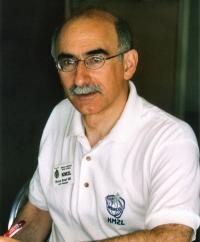
From Warren, KD4GUA:
Last week we discussed CV updates. We had 35 check-ins.
This week (Febraury 26) we will discuss, as by request by Willis N5JDT, "Mercury Poisoning." Lee K3WFB has some personal experiences with this problem. We are all eating more fish--how much is safe and should we eat the little fish or the big ones? (more people eat sharks than sharks eat people).Tune in and find out!!!!!
Sunday, February 26, 2006


Thursday, February 16, 2006
MARCO Grand Rounds for February 8, 2006
From Warren, KD4GUA:
Last week we discussed Lupus.
This week we will discuss the findings at the recent American Heart Association meeting in Orlando. As a follow-up we will offer the over 50 crowd the test now appearing in the Feb. 15 JAMA entitled "Chances of your dying in the next 4 years." The article is on page 801 entitled "Development and Validation of a Prognostic Index for 4-Year Mortality in Older Adults." By taking this test you will determine which CD you will take out next and just how long you need on your car warranty.
It is like taking a pleasure trip-- such as taking your mother-in-law to the airport. The test is optional.
There was a fellow who developed a camera that could take your picture 5 years in the future--would you have yours taken?
Last week we discussed Lupus.
This week we will discuss the findings at the recent American Heart Association meeting in Orlando. As a follow-up we will offer the over 50 crowd the test now appearing in the Feb. 15 JAMA entitled "Chances of your dying in the next 4 years." The article is on page 801 entitled "Development and Validation of a Prognostic Index for 4-Year Mortality in Older Adults." By taking this test you will determine which CD you will take out next and just how long you need on your car warranty.
It is like taking a pleasure trip-- such as taking your mother-in-law to the airport. The test is optional.
There was a fellow who developed a camera that could take your picture 5 years in the future--would you have yours taken?
Thursday, February 09, 2006
MARCO Grand Rounds for February 8, 2006
From Warren, KD4GUA:
Last week we finished with the consensus of health care in the USA in 2010. Incidentally, had interview with a Dutchman who explained the new health system (went into effect Jan. 1, 2006) in the Netherlands where, get this, the government has been all but phased out of the health care business...it is now mandatory that all citizens over 18 have a private basic health care policy with extras available at higher rates. All physcians MUST retire when they are 65. and entry to medical school is via a lottery. Details in next NL
This week we will discuss "LUPUS"--check the article in the FEb. 1 2006 JAMA, using stem cells after ablation rx.
Last week we finished with the consensus of health care in the USA in 2010. Incidentally, had interview with a Dutchman who explained the new health system (went into effect Jan. 1, 2006) in the Netherlands where, get this, the government has been all but phased out of the health care business...it is now mandatory that all citizens over 18 have a private basic health care policy with extras available at higher rates. All physcians MUST retire when they are 65. and entry to medical school is via a lottery. Details in next NL
This week we will discuss "LUPUS"--check the article in the FEb. 1 2006 JAMA, using stem cells after ablation rx.
Friday, February 03, 2006
MARCO Grand Rounds for February 5, 2006
From Warren, KD4GUA:
Last Sunday Harry WB9EDP discussed "Strokes."
This Sunday we will finish up on "Consensus--health care in 2012." What it probably will be like. Bone up on the new Health Savings Accounts.
The following week we have Lupus and Mercury poisoning on the agenda--which do you prefer?
The Newsletter went in the mail yesterday. There is one error, can anyone pick it up????? (at least I think there is only one error!!!!!).
Last Sunday Harry WB9EDP discussed "Strokes."
This Sunday we will finish up on "Consensus--health care in 2012." What it probably will be like. Bone up on the new Health Savings Accounts.
The following week we have Lupus and Mercury poisoning on the agenda--which do you prefer?
The Newsletter went in the mail yesterday. There is one error, can anyone pick it up????? (at least I think there is only one error!!!!!).
MARCO Grand Rounds for February 5, 2006
From Warren, KD4GUA:
Last Sunday Harry WB9EDP discussed "Strokes."
This Sunday we will finish up on "Consensus--health care in 2012." What it probably will be like. Bone up on the new Health Savings Accounts.
The following week we have Lupus and Mercury poisoning on the agenda--which do you prefer?
The Newsletter went in the mail yesterday. There is one error, can anyone pick it up????? (at least I think there is only one error!!!!!).
Last Sunday Harry WB9EDP discussed "Strokes."
This Sunday we will finish up on "Consensus--health care in 2012." What it probably will be like. Bone up on the new Health Savings Accounts.
The following week we have Lupus and Mercury poisoning on the agenda--which do you prefer?
The Newsletter went in the mail yesterday. There is one error, can anyone pick it up????? (at least I think there is only one error!!!!!).
Thursday, January 26, 2006
MARCO Grand Rounds for January 29, 2006
This Sunday we apparently will have a VOX POP, "Voice of the People," a random give and take discussion of current medical events. Warren, KD4gua, will be off this Sunday for a family gathering in Jacksonville. It has been the custom when there is no net controller that the officers will take over, which means Chip our President and Arnold our President-elect will run the net and pick up the checkin list. If they have trouble getting their signals out then they can appoint someone with a better signal to act as relay.
The 40 meter net Monday night was active. Bill, N5QF, our MediShare director reports a link to another Medishare outfit is paying off--they have volunteered to donate money to us. Bill also reports, we almost have enough money to get the Motorola hand helds for the Sri Lanka Hospital.
The following Sunday we will continue the consensus of medicine in the US in 2012.
Bruce KM2L is going skiing this Sunday, careful Bruce, you are not 16!!!! Our sympathy goes out to Harry WB9EDP and Ellen KC9ARN in Chicago with the loss of Ellen's Mom.
More later, Warren KD4gua.
The 40 meter net Monday night was active. Bill, N5QF, our MediShare director reports a link to another Medishare outfit is paying off--they have volunteered to donate money to us. Bill also reports, we almost have enough money to get the Motorola hand helds for the Sri Lanka Hospital.
The following Sunday we will continue the consensus of medicine in the US in 2012.
Bruce KM2L is going skiing this Sunday, careful Bruce, you are not 16!!!! Our sympathy goes out to Harry WB9EDP and Ellen KC9ARN in Chicago with the loss of Ellen's Mom.
More later, Warren KD4gua.
Tuesday, January 24, 2006
MARCO Grand Rounds for January 22, 2006
Sunday, we discussed a consensus--health care in 2012.
We learned about "Health Savings Accounts," (HSA) which enable one to deposit $1,000+ in a bank annually after getting a "Catastrophic Health Care" policy. The money interest builds up tax-free if you don't use it and healthy young people could build up a retirement nest egg if they don't get sick. In case of death, the account can be passed on to relatives tax free. This is termed "Consumer Driven Healthcare," and enables the individual to pay his bills out of his HSA (if bills go over$5,250 the policy kicks in).
President Bush is going to address this in his coming "State of the Nation" speech Jan. 31st. We all should be able to advise our patients about it.
The second item is the Government Basic Care health package that will cover everyone and provide for immunizations, physicals, fractures, communicable diseases and basic levels of treatment for cancer and chronic illnesses. Premium and Privileged Care, one and two steps up will be run by private companies and will cover 100 year olds on feeding tubes and keeping very premature babies on $1 million health support. To keep politics out, it will be run by a semi-quasi government organ like the Post Office and the Federal Reserve.
Other items of interests include the muzzling of trial lawyers and the required decrease in doctors (there is now one doctor for every 300 people--it should be one for every 500--too many docs generate too much expense?).
This and other items will have to be targeted for a week from Sunday as I will be in Jacksonville Sunday morning.
We need a net controller for Jan. 29. I am asking Harry, WB9EDP, if he could kick in with "Strokes." He has been under a lot of stress lately and may not be available--if anyone else would be interested in carrying out net control duties please advise.
The Newsletter went to press today and your certificates of CME attendance will be in your hands in about 10 days enclosed with the NL. There are some questionable stories that will either make you laugh a lot or make you groan even more. Would appreciate your feedback.
The 2006 CME standings will be on listserve next week. The 2005 CME standings are in the newsletter. Keep the blue side up.....Warren KD4gua.
We learned about "Health Savings Accounts," (HSA) which enable one to deposit $1,000+ in a bank annually after getting a "Catastrophic Health Care" policy. The money interest builds up tax-free if you don't use it and healthy young people could build up a retirement nest egg if they don't get sick. In case of death, the account can be passed on to relatives tax free. This is termed "Consumer Driven Healthcare," and enables the individual to pay his bills out of his HSA (if bills go over$5,250 the policy kicks in).
President Bush is going to address this in his coming "State of the Nation" speech Jan. 31st. We all should be able to advise our patients about it.
The second item is the Government Basic Care health package that will cover everyone and provide for immunizations, physicals, fractures, communicable diseases and basic levels of treatment for cancer and chronic illnesses. Premium and Privileged Care, one and two steps up will be run by private companies and will cover 100 year olds on feeding tubes and keeping very premature babies on $1 million health support. To keep politics out, it will be run by a semi-quasi government organ like the Post Office and the Federal Reserve.
Other items of interests include the muzzling of trial lawyers and the required decrease in doctors (there is now one doctor for every 300 people--it should be one for every 500--too many docs generate too much expense?).
This and other items will have to be targeted for a week from Sunday as I will be in Jacksonville Sunday morning.
We need a net controller for Jan. 29. I am asking Harry, WB9EDP, if he could kick in with "Strokes." He has been under a lot of stress lately and may not be available--if anyone else would be interested in carrying out net control duties please advise.
The Newsletter went to press today and your certificates of CME attendance will be in your hands in about 10 days enclosed with the NL. There are some questionable stories that will either make you laugh a lot or make you groan even more. Would appreciate your feedback.
The 2006 CME standings will be on listserve next week. The 2005 CME standings are in the newsletter. Keep the blue side up.....Warren KD4gua.
Tuesday, January 17, 2006
MARCO Grand Rounds for January 15, 2006
From Warren, KD4GUA:
Sunday we finished "Correctional Medicine" (what goes on behind bars--metal bars). Harry, WB9EDP did an excellent job telling about his 6 years in the Big House (Cook County Jail, 16,000 inmates). It is a potentially dangerous job as Miles, W3DRB testified after working in a Philadelphia area prison.
This week we will discuss "Consensus--Health Care in 2012." Tune in 14.308, Sunday, 10 a.m. Eastern time and find what you can expect in the not too distant future. (We were able to get a quick trip on the time machine.)
Sunday we finished "Correctional Medicine" (what goes on behind bars--metal bars). Harry, WB9EDP did an excellent job telling about his 6 years in the Big House (Cook County Jail, 16,000 inmates). It is a potentially dangerous job as Miles, W3DRB testified after working in a Philadelphia area prison.
This week we will discuss "Consensus--Health Care in 2012." Tune in 14.308, Sunday, 10 a.m. Eastern time and find what you can expect in the not too distant future. (We were able to get a quick trip on the time machine.)
Monday, January 09, 2006
MARCO Grand Rounds - January 7, 2006 Results
From Warren, KD4UGA:
Those who tuned into the program Sunday (33 check-ins) on "Correctional Medicine," were well rewarded. Harry, WB9EDP, told about working at the largest jail in the World--the Cook County Jail which houses up to 16,000 inmates on a 20 acre site in Chicago with more than 300 new inmates coming in daily.
In Illinois, a JAIL is not a PRISON. A jail is where those awaiting trial and those appealing and those in process--go. A Prison is where someone has been found guilty and is spending his sentence time.
The discussion will be continued this coming Sunday.
Monday night MediShare net, 9:30 p.m. Eastern, 40 meters at 7.228--chew the rag, the fat, bubble gum, hot dogs....No Monday night football.
Those who tuned into the program Sunday (33 check-ins) on "Correctional Medicine," were well rewarded. Harry, WB9EDP, told about working at the largest jail in the World--the Cook County Jail which houses up to 16,000 inmates on a 20 acre site in Chicago with more than 300 new inmates coming in daily.
In Illinois, a JAIL is not a PRISON. A jail is where those awaiting trial and those appealing and those in process--go. A Prison is where someone has been found guilty and is spending his sentence time.
The discussion will be continued this coming Sunday.
Monday night MediShare net, 9:30 p.m. Eastern, 40 meters at 7.228--chew the rag, the fat, bubble gum, hot dogs....No Monday night football.
Friday, January 06, 2006
MARCO Grand Rounds for January 8, 2006
From Warren, KD4GUA:
This Sunday, Harry will inform us on "Correctional Medicine," i.e., medicine in one of the largest city prisons. On my visits to the prisons I remember how gentle, meek, and subordinate the crooks appeared.
During WW II the Dutch used to say, "The Germans were either at your throat or at your heels--clicking heels "Bitte Shein." Are prisoners in our jails that way too? Tune in Sunday, 10 a.m. 14.308 and find out.
During WW II the Dutch used to say, "The Germans were either at your throat or at your heels--clicking heels "Bitte Shein." Are prisoners in our jails that way too? Tune in Sunday, 10 a.m. 14.308 and find out.
We had six on board the MediShare 40 meter net Monday night and picked up one new member--good work, participants. Wade from Canton, Ohio was interested in joining Marco. Information on the way.
Sunday, January 01, 2006
MARCO Grand Rounds, January 1, 2006
From Warren, KD4GUA
We will attempt to finish up the discussion on NASH (Non Alcoholic SteatoHepatitis) Sunday which is New Years Day. This is a common, often "silent" liver disease that occurs in people who drink little or no alcohol and is becoming more common because of the greater number of Americans with obesity.
The final CME standings will be on List Serve next week. A certificate of attendance will accompany your next newsletter.
If you have a topic for discussion please tack it on the end of this message. Since it is time for cabin fever up north, expect all you "fine folks" to be listening to 14.308 at ten Eastern on the first day of the new year. Put the snow shovels away for one hour and enjoy the heat emanating from the deep South. By the way, Dean Martin had a mother-in-law, aged 92 that didn't need glasses! (She drank it straight from the bourbon bottle!).
Wednesday, December 21, 2005
MARCO Grand Rounds - Year End Wrap-Up
From Warren, KD4GUA:
There will be no formal net program on Xmas Day. There will be greetings etc., instead. The program "The New Kid On the Block--Non-alcoholic cirrhosis--will continue on New Years Day.
We have been having excessive splatter from the two powerful Spanish-speaking stations on 14.310 that do not identify. (Blogmaster's note: One of them is AD4C). We have asked them to move but to no avail. This has been going on for over two years...we are asking you to write and notify ARRL to investigate. (hqinfo@arrl.org)
Total checkins for 2005 were 1,517 (average 29.17) below 2004's, 1,534 (average 29.50) and 2003s' 1,519. (average 29.23). Drop-off contributed by attrition, hurricanes and low solar cycle???
2005 was much higher however, than 1998 (694 checkins), 1999 (766), 2000 (1,035), 2001 (1,153) and 2002 (1,326).
Certificates of CME participation will be included separately in the next Newsletter. Those who are not members or are delinquent are asked to join MARCO so we can forward your certificate. (Physicians $25; Associates $15...Marco, 144 Head of the Tide, Belfast, Maine 04915.)
Please advise net control what subjects you would like to have discussed in 2006.
Final standings will be posted after January 1. It has been a pleasure meeting with such a fine group each Sunday--Let's keep it going....Warren KD4gua.
P.S. Eat plenty of goodies between now and next year because people gain weight between New Years and Christmas, not between Christmas and New Years!!!!
There will be no formal net program on Xmas Day. There will be greetings etc., instead. The program "The New Kid On the Block--Non-alcoholic cirrhosis--will continue on New Years Day.
We have been having excessive splatter from the two powerful Spanish-speaking stations on 14.310 that do not identify. (Blogmaster's note: One of them is AD4C). We have asked them to move but to no avail. This has been going on for over two years...we are asking you to write and notify ARRL to investigate. (hqinfo@arrl.org)
Total checkins for 2005 were 1,517 (average 29.17) below 2004's, 1,534 (average 29.50) and 2003s' 1,519. (average 29.23). Drop-off contributed by attrition, hurricanes and low solar cycle???
2005 was much higher however, than 1998 (694 checkins), 1999 (766), 2000 (1,035), 2001 (1,153) and 2002 (1,326).
Certificates of CME participation will be included separately in the next Newsletter. Those who are not members or are delinquent are asked to join MARCO so we can forward your certificate. (Physicians $25; Associates $15...Marco, 144 Head of the Tide, Belfast, Maine 04915.)
Please advise net control what subjects you would like to have discussed in 2006.
Final standings will be posted after January 1. It has been a pleasure meeting with such a fine group each Sunday--Let's keep it going....Warren KD4gua.
P.S. Eat plenty of goodies between now and next year because people gain weight between New Years and Christmas, not between Christmas and New Years!!!!
Monday, December 12, 2005
MARCO Grand Rounds for December 11, 2005
From Warren, KD4GUA:
Last Sunday we discussed Medicare Part D. We will continue this discussion this Sunday. Correction: There IS a Medicare Part C--it consists of "Medicare Advantage" plans which give the HMOs and PPOs the power to regulate your Medicare A & B. Sorry about that--we all learn, more or less.
A first (second?) for Marco--Ellen, KC9ARN checked in Sunday from 30,000 ' (She is a stew for American Airlines)
2005 is almost gone--to get your CME Category II hours up tune in for the remainder.
A certificate will be issued to all those with over 5 hours credit.
Last Sunday we discussed Medicare Part D. We will continue this discussion this Sunday. Correction: There IS a Medicare Part C--it consists of "Medicare Advantage" plans which give the HMOs and PPOs the power to regulate your Medicare A & B. Sorry about that--we all learn, more or less.
A first (second?) for Marco--Ellen, KC9ARN checked in Sunday from 30,000 ' (She is a stew for American Airlines)
2005 is almost gone--to get your CME Category II hours up tune in for the remainder.
A certificate will be issued to all those with over 5 hours credit.
MARCO Grand Rounds for December 11, 2005
Frm Warren, KD4GUA:
Last Sunday we discussed Medicare Part D. We will continue this discussion this Sunday. Correction: There IS a Medicare Part C--it consists of "Medicare Advantage" plans which give the HMOs and PPOs the power to regulate your Medicare A & B. Sorry about that--we all learn, more or less.
A first (second?) for Marco--Ellen, KC9ARN checked in Sunday from 30,000 ' (She is a stew for American Airlines) .
2005 is almost gone--to get your CME Category II hours up tune in for the remainder. A certificate will be issued to all those with over 5 hours credit.
Last Sunday we discussed Medicare Part D. We will continue this discussion this Sunday. Correction: There IS a Medicare Part C--it consists of "Medicare Advantage" plans which give the HMOs and PPOs the power to regulate your Medicare A & B. Sorry about that--we all learn, more or less.
A first (second?) for Marco--Ellen, KC9ARN checked in Sunday from 30,000 ' (She is a stew for American Airlines) .
2005 is almost gone--to get your CME Category II hours up tune in for the remainder. A certificate will be issued to all those with over 5 hours credit.
Thursday, December 08, 2005
MARCO Grand Rounds for December 6, 2005
From Warren, KD4GUA:
Last Sunday we finished up sleep...this week by demand we will be discussing PART D MEDICARE which, when, who should enlist and which plan is most cost effective. There are some deadlines approaching for possibly you and for your patients. Tune in and find which plan is best. And, oh yes, there is NO part C Medicare--yet.
Monday, November 21, 2005
MARCO Grand Rounds for November 20, 2005
From Warren, KD4GUA:
Last Sunday we competed with contesters (again) but managed to conclude "AUTISM". This Sunday we will update "Sleep & Sleeping Disorders" and discuss the new drugs Lunesta and Remelteon--do they work and if so how good are they? Why can't people go to sleep and stay asleep? How much sleep do we really need? Why do we sleep?
We are looking for new topics to talk about. If you would like to present a program say so, don't be bashful.
Good hearing from Joe W5DJH in Houston, Ed W4UVS in Oak Ridge, Miles W3DRB in Elizabethtown, Ian, K3iK in Shavertown, Bob VE3OQM in Hamilton.
Last Sunday we competed with contesters (again) but managed to conclude "AUTISM". This Sunday we will update "Sleep & Sleeping Disorders" and discuss the new drugs Lunesta and Remelteon--do they work and if so how good are they? Why can't people go to sleep and stay asleep? How much sleep do we really need? Why do we sleep?
We are looking for new topics to talk about. If you would like to present a program say so, don't be bashful.
Good hearing from Joe W5DJH in Houston, Ed W4UVS in Oak Ridge, Miles W3DRB in Elizabethtown, Ian, K3iK in Shavertown, Bob VE3OQM in Hamilton.
Monday, November 07, 2005
MARCO Grand Rounds for November 6, 2005
From Warren, KD4GUA:
We lost Gerald Bellehumeur MD, former anesthesiologist and pilot. His wife Susan renewed his membership in Marco in his honor.
Since we failed to have a topic for discussion last week (October 30), no CME credits given for checking in--the contestors drowned out everyone.
Last week we discussed GAS. This week we will talk about AUTISM--a symptom and not a disease. It affects 6 out of every 1000 newborns and is more common than we think. Chip N5RTF will be on board to answer questions concerning the NP side of the problem.
We lost Gerald Bellehumeur MD, former anesthesiologist and pilot. His wife Susan renewed his membership in Marco in his honor.
Since we failed to have a topic for discussion last week (October 30), no CME credits given for checking in--the contestors drowned out everyone.
Sunday, November 06, 2005
More on Ham Radio in Emergencies
From Bob Conder, K4RLC:
The November issue of the Southeastern Repeater Journal has articles by
three hams who were in the Mississippi-Louisiana gulf area post Katrina,
either conducting communications or working with the Red Cross Disaster
Services. It speaks to what it was like and what worked for communications.

... get a copy of the entire issue if you can.

Basically, LCD radio services were what worked - lowest common denominator
- VHF and HF phone simplex. Battery operated, off the grid.

Bob K4RLC
Ham Radio in Emergencies
Smitty, W6CS, forwarded this discussion from Rick Ellinger:
A few months ago, NBC's Tonight Show staged a race between a pair of ham-radio operators with Morse-code keys and a couple of kids with text-messaging cellphones to see who could communicate faster. The hams won hands down, proving, in the minds of some, that old technology could hold its own against new. In recent days, ham radio was put to the test again by Hurricane Katrina. This time, however, lives were at stake.
In the world of design engineers and electronics in general, change is essential. Designers work diligently to make the fruits of their labors obsolete almost before they see daylight. The turnover in technology is sometimes like a flood, with old being washed away by new over and over. Often, the new beats the heck out of the old. But there are times when old isn't necessarily bad; in fact, sometimes old works when new doesn't. And then we're glad that old is still around, or at least we should be.
Wireless technology, while relatively new to many consumers, is of course not new at all. A few (very) old-timers remember the original "wireless" of radio. The revolution wrought by the pioneers of wireless changed the world then, and the technology behind that revolution has been re-invented and re-applied time and again. Its pre-eminent incarnation today is our near-ubiquitous wireless communications infrastructure, which has freed us from the shackles of landlines and made our mobile lifestyles possible. Technology truly is great stuff.
Until, of course, a monster hurricane comes along to render it nearly useless. Here we see a scenario in which a flood literally swept away the new. As Hurricane Katrina's fury hammered the Gulf states on August 29, the communications infrastructure took a devastating hit. Telephone service, including wireless, became at first intermittent and then unusable in many localities. Where there was phone service, 911 switchboards were often unreachable due to the massive volume of calls. The response of local authorities, now termed "confused" by deposed FEMA chief Michael Brown, wasn't helping much. The Gulf Coast was about to descend into darkness, chaos, and, worst of all for many, silence.
But proponents of the old were at the ready. The "old," in this case, is ham radio. In the eyes of the "man on the street," ham radio has a pretty stodgy reputation. Aren't hams still using Morse code? Don't some of them use radios with tubes, for goodness sake? What the "man in the street" probably doesn't know is that it was amateurs who advanced the radio arts early in the 20th century. Down through the decades, amateurs have embraced (and often driven) all of the innovations in wireless technology, up to and including all digital modes and the Internet. But many have stayed in touch with their roots, which is good old-fashioned analog HF operation. And while amateurs have a longstanding tradition as innovators and experimenters, they also have a mandate that comes with their licenses: to be ready, willing, and able to provide emergency communications whenever and wherever they're needed.
As Katrina bore down on the Gulf region, amateur radio operators, under the aegis of the American Radio Relay League's (ARRL's) Amateur Radio Emergency Service (ARES), prepared to swing into action with emergency networks that would run health-and-welfare traffic into and out of the disaster zone. As early as the Monday following the storm, hams throughout the hurricane zone were putting emergency stations on the air. In one instance, hams were instrumental in the rescue of 15 people clinging for life to a New Orleans rooftop. Meanwhile, in Alabama, amateur SKYWARN weather nets kept the National Weather Service apprised of conditions throughout the state. In hard-hit sections of Mississippi, hams running off generators and with makeshift antennas were the only means of communication, getting word to out-of-state friends and relatives concerning their loved ones.
There were numerous other instances of hams helping those who were not simply inconvenienced by the storm, but whose lives were in imminent danger. Now that things have calmed down in the Gulf region, many of the emergency nets have stood down. But hams continue to serve the public in the many areas that are still without power or phone service.
As our nation collects itself in the aftermath of the Katrina disaster, President Bush has promised federal reviews of what went right and what went wrong. One of the findings of those inquiries should be that the federally-instituted Amateur Radio Service, which functions under the licensing authority of the FCC, stood tall when the country needed it.
Amateur radio currently faces various threats to its existence. Chief among those is the advent of broadband-over-powerline (BPL) technology, which, if broadly adopted, has the potential to cause widespread interference to HF communications, not just for amateurs but for other services that use the HF spectrum.
Amateurs and the ARRL have made a lot of noise about BPL, asserting that it could seriously hamper their efforts and those of relief agencies such as the Red Cross and Salvation Army, in the event of a disaster such as Katrina. It's rumored, though, that the same FCC commissioners who have given their blessing to BPL field trials will now take a much harder look at the technical issues concerning BPL and its interference potential in the HF spectrum. Let's face it: The federal government didn't handle the emergency in the Gulf very well; it'd be prudent for it not to sanction a technology that could impede one of the few things that actually worked.
Many readers of this newsletter are amateur radio enthusiasts. If you are, and if you haven't already done so, consider writing your congressman to express your concern about the future of the Amateur Radio Service, especially in light of its outstanding efforts in recent days. Remind your elected representatives that a vibrant and unimpeded Amateur service can and will be a lifesaver when disaster strikes. Also, consider how you yourself might help. What if a hurricane, tornado, or earthquake ravages your area? Are you prepared to get on the air without relying on the mains to handle emergency traffic? Get in touch with your local amateur-radio club and find out how you can pitch in.
Your cell phones and wireless routers are indeed great stuff, but so is a good old HF transceiver. We shouldn't always be in such a hurry to let the flood of new technology wash away the old. The geek down the block with all the antennas on his property could turn out to be your best friend someday. Because sometimes, old trumps new.
A few months ago, NBC's Tonight Show staged a race between a pair of ham-radio operators with Morse-code keys and a couple of kids with text-messaging cellphones to see who could communicate faster. The hams won hands down, proving, in the minds of some, that old technology could hold its own against new. In recent days, ham radio was put to the test again by Hurricane Katrina. This time, however, lives were at stake.
In the world of design engineers and electronics in general, change is essential. Designers work diligently to make the fruits of their labors obsolete almost before they see daylight. The turnover in technology is sometimes like a flood, with old being washed away by new over and over. Often, the new beats the heck out of the old. But there are times when old isn't necessarily bad; in fact, sometimes old works when new doesn't. And then we're glad that old is still around, or at least we should be.
Wireless technology, while relatively new to many consumers, is of course not new at all. A few (very) old-timers remember the original "wireless" of radio. The revolution wrought by the pioneers of wireless changed the world then, and the technology behind that revolution has been re-invented and re-applied time and again. Its pre-eminent incarnation today is our near-ubiquitous wireless communications infrastructure, which has freed us from the shackles of landlines and made our mobile lifestyles possible. Technology truly is great stuff.
Until, of course, a monster hurricane comes along to render it nearly useless. Here we see a scenario in which a flood literally swept away the new. As Hurricane Katrina's fury hammered the Gulf states on August 29, the communications infrastructure took a devastating hit. Telephone service, including wireless, became at first intermittent and then unusable in many localities. Where there was phone service, 911 switchboards were often unreachable due to the massive volume of calls. The response of local authorities, now termed "confused" by deposed FEMA chief Michael Brown, wasn't helping much. The Gulf Coast was about to descend into darkness, chaos, and, worst of all for many, silence.
But proponents of the old were at the ready. The "old," in this case, is ham radio. In the eyes of the "man on the street," ham radio has a pretty stodgy reputation. Aren't hams still using Morse code? Don't some of them use radios with tubes, for goodness sake? What the "man in the street" probably doesn't know is that it was amateurs who advanced the radio arts early in the 20th century. Down through the decades, amateurs have embraced (and often driven) all of the innovations in wireless technology, up to and including all digital modes and the Internet. But many have stayed in touch with their roots, which is good old-fashioned analog HF operation. And while amateurs have a longstanding tradition as innovators and experimenters, they also have a mandate that comes with their licenses: to be ready, willing, and able to provide emergency communications whenever and wherever they're needed.
As Katrina bore down on the Gulf region, amateur radio operators, under the aegis of the American Radio Relay League's (ARRL's) Amateur Radio Emergency Service (ARES), prepared to swing into action with emergency networks that would run health-and-welfare traffic into and out of the disaster zone. As early as the Monday following the storm, hams throughout the hurricane zone were putting emergency stations on the air. In one instance, hams were instrumental in the rescue of 15 people clinging for life to a New Orleans rooftop. Meanwhile, in Alabama, amateur SKYWARN weather nets kept the National Weather Service apprised of conditions throughout the state. In hard-hit sections of Mississippi, hams running off generators and with makeshift antennas were the only means of communication, getting word to out-of-state friends and relatives concerning their loved ones.
There were numerous other instances of hams helping those who were not simply inconvenienced by the storm, but whose lives were in imminent danger. Now that things have calmed down in the Gulf region, many of the emergency nets have stood down. But hams continue to serve the public in the many areas that are still without power or phone service.
As our nation collects itself in the aftermath of the Katrina disaster, President Bush has promised federal reviews of what went right and what went wrong. One of the findings of those inquiries should be that the federally-instituted Amateur Radio Service, which functions under the licensing authority of the FCC, stood tall when the country needed it.
Amateur radio currently faces various threats to its existence. Chief among those is the advent of broadband-over-powerline (BPL) technology, which, if broadly adopted, has the potential to cause widespread interference to HF communications, not just for amateurs but for other services that use the HF spectrum.
Amateurs and the ARRL have made a lot of noise about BPL, asserting that it could seriously hamper their efforts and those of relief agencies such as the Red Cross and Salvation Army, in the event of a disaster such as Katrina. It's rumored, though, that the same FCC commissioners who have given their blessing to BPL field trials will now take a much harder look at the technical issues concerning BPL and its interference potential in the HF spectrum. Let's face it: The federal government didn't handle the emergency in the Gulf very well; it'd be prudent for it not to sanction a technology that could impede one of the few things that actually worked.
Many readers of this newsletter are amateur radio enthusiasts. If you are, and if you haven't already done so, consider writing your congressman to express your concern about the future of the Amateur Radio Service, especially in light of its outstanding efforts in recent days. Remind your elected representatives that a vibrant and unimpeded Amateur service can and will be a lifesaver when disaster strikes. Also, consider how you yourself might help. What if a hurricane, tornado, or earthquake ravages your area? Are you prepared to get on the air without relying on the mains to handle emergency traffic? Get in touch with your local amateur-radio club and find out how you can pitch in.
Your cell phones and wireless routers are indeed great stuff, but so is a good old HF transceiver. We shouldn't always be in such a hurry to let the flood of new technology wash away the old. The geek down the block with all the antennas on his property could turn out to be your best friend someday. Because sometimes, old trumps new.
Saturday, November 05, 2005
Soil Liquefaction by Hurricane Katrina, Reply.
Dave, KI5NG, in response to N5RTF's proposal:
Having grown up experiencing hurricanes on the Texas coast (Deborah [cat. 1], Carla [cat. 4], Beulah [cat. 3]. and Alicia [cat.3]; I don't count Rita, during which we only had tropical storm-force winds) and having been in the eyes of the first three, I remember something that I rarely hear mentioned in this day of live reporting.
As the eyes of Carla and Beulah approached, there was a "buzzing" sound, very loud, that most resembled the sound made by a four-piston-engined bomber flying overhead. I remember WWII-era adults saying things like, "What idiots would be flying around in weather like this?" My dad, who had first heard this during a cat. 4 1949 hurricane (they weren't named back then), recalled that this sound seemed to occur when winds exceeded 125 mph or so.
Every dentist knows that freshly mixed dental stone (modified plaster-of-Paris) is virtually thixotropic before it sets. To get it to flow into the intricacies of our intra-oral impressions, we subject it to a vibrator that causes the stone to liquefy. During dental school, when there might be several of these things going at the same time, the sound was very similar to that of a piston-powered multi-engined plane or .... like the sound I heard during the peaks of Carla and Beulah.
I have always assumed that such liquefaction of dental stone followed the same physics as soil liquefaction during an earthquake. The interaction of strong airborne vibrations with the ground and water would certainly be highly complex, but why couldn't such vibrations, under the right conditions, produce standing waves of highly significant energies?
I think your deduction is brilliant. If I were a graduate student, I would be wetting my pants to get approval to do a thesis on this.
David - KI5NG
Having grown up experiencing hurricanes on the Texas coast (Deborah [cat. 1], Carla [cat. 4], Beulah [cat. 3]. and Alicia [cat.3]; I don't count Rita, during which we only had tropical storm-force winds) and having been in the eyes of the first three, I remember something that I rarely hear mentioned in this day of live reporting.
As the eyes of Carla and Beulah approached, there was a "buzzing" sound, very loud, that most resembled the sound made by a four-piston-engined bomber flying overhead. I remember WWII-era adults saying things like, "What idiots would be flying around in weather like this?" My dad, who had first heard this during a cat. 4 1949 hurricane (they weren't named back then), recalled that this sound seemed to occur when winds exceeded 125 mph or so.
Every dentist knows that freshly mixed dental stone (modified plaster-of-Paris) is virtually thixotropic before it sets. To get it to flow into the intricacies of our intra-oral impressions, we subject it to a vibrator that causes the stone to liquefy. During dental school, when there might be several of these things going at the same time, the sound was very similar to that of a piston-powered multi-engined plane or .... like the sound I heard during the peaks of Carla and Beulah.
I have always assumed that such liquefaction of dental stone followed the same physics as soil liquefaction during an earthquake. The interaction of strong airborne vibrations with the ground and water would certainly be highly complex, but why couldn't such vibrations, under the right conditions, produce standing waves of highly significant energies?
I think your deduction is brilliant. If I were a graduate student, I would be wetting my pants to get approval to do a thesis on this.
David - KI5NG
Subscribe to:
Posts (Atom)